
7 Essential Landscape Photography Composition Tips for Stunning Photos
Master landscape photography with proven composition techniques. Learn rule of thirds, leading lines, foreground focus & more to capture breathtaking nature shots.
Understanding the Fundamentals of Landscape Photography Composition
Landscape photography is one of the most rewarding yet challenging genres in photography. While capturing stunning scenery might seem straightforward, creating compelling compositions that truly engage viewers requires understanding fundamental principles and techniques. Whether you’re photographing mountain vistas, seascapes, or forest scenes, mastering composition will transform your landscape images from simple snapshots into captivating works of art.
The key to exceptional landscape photography lies not just in finding beautiful locations, but in seeing and organizing visual elements within your frame to create maximum impact. This comprehensive guide will walk you through proven composition techniques, camera settings, and practical tips to elevate your landscape photography skills.
Essential Composition Rules for Landscape Photography
The Rule of Thirds: Your Foundation for Better Images
The rule of thirds remains the most fundamental composition principle in landscape photography. This technique involves dividing your frame into nine equal sections using two horizontal and two vertical lines, creating four intersection points where the eye naturally gravitates.
Step-by-step application:
- Enable the grid lines on your camera’s LCD or viewfinder
- Position your horizon along either the upper or lower third line, not the center
- Place prominent vertical elements (trees, rock formations, waterfalls) along the vertical third lines
- Use the intersection points for focal points like lone trees, rock outcroppings, or architectural elements
Pro tip: Place your horizon on the lower third when the sky is dramatic with interesting clouds or colors. Use the upper third when the foreground contains compelling elements like interesting rocks, flowers, or water features.
Leading Lines: Guiding the Viewer’s Journey
Leading lines are one of the most powerful tools for creating depth and drawing viewers into your landscape images. These lines guide the eye through the composition toward your main subject or point of interest.
Types of leading lines in landscapes:
- Natural lines: Rivers, shorelines, rock formations, fallen logs
- Man-made lines: Fences, paths, roads, bridges
- Implied lines: Arrangements of rocks, patterns in sand, cloud formations
Implementation technique:
- Scout your location for potential leading lines before setting up your shot
- Position yourself so the line enters from a corner of the frame
- Ensure the line leads to something interesting, not out of the frame
- Use wide-angle lenses (14-24mm) to emphasize the line’s journey through the scene
Foreground, Middle Ground, and Background: Creating Depth
Professional landscape photographers understand that compelling images need multiple layers to create depth and visual interest. This three-dimensional approach separates amateur snapshots from professional-quality images.
Foreground elements (bottom third of frame):
- Interesting rocks, flowers, or driftwood
- Water features like streams or tide pools
- Textured surfaces that complement the overall scene
Middle ground (central area):
- Secondary subjects that support the main focal point
- Transitional elements that connect foreground to background
- Hills, trees, or architectural features
Background (upper third):
- Mountain ranges, dramatic skies, or distant horizons
- Main subject matter in many landscape compositions
- Elements that provide context and scale
Advanced Composition Techniques
Framing: Creating Natural Windows
Natural framing uses elements within the scene to create a “window” around your main subject, adding depth and focusing attention on key elements.
Effective framing elements:
- Tree branches and foliage
- Rock arches and cave openings
- Architectural features like windows or doorways
- Overhanging elements that create partial frames
Technical execution:
- Use smaller apertures (f/8-f/11) to keep both frame and subject sharp
- Focus approximately one-third into the scene for optimal depth of field
- Consider using focus stacking for maximum sharpness throughout the frame
- Experiment with different positions to find the most effective framing
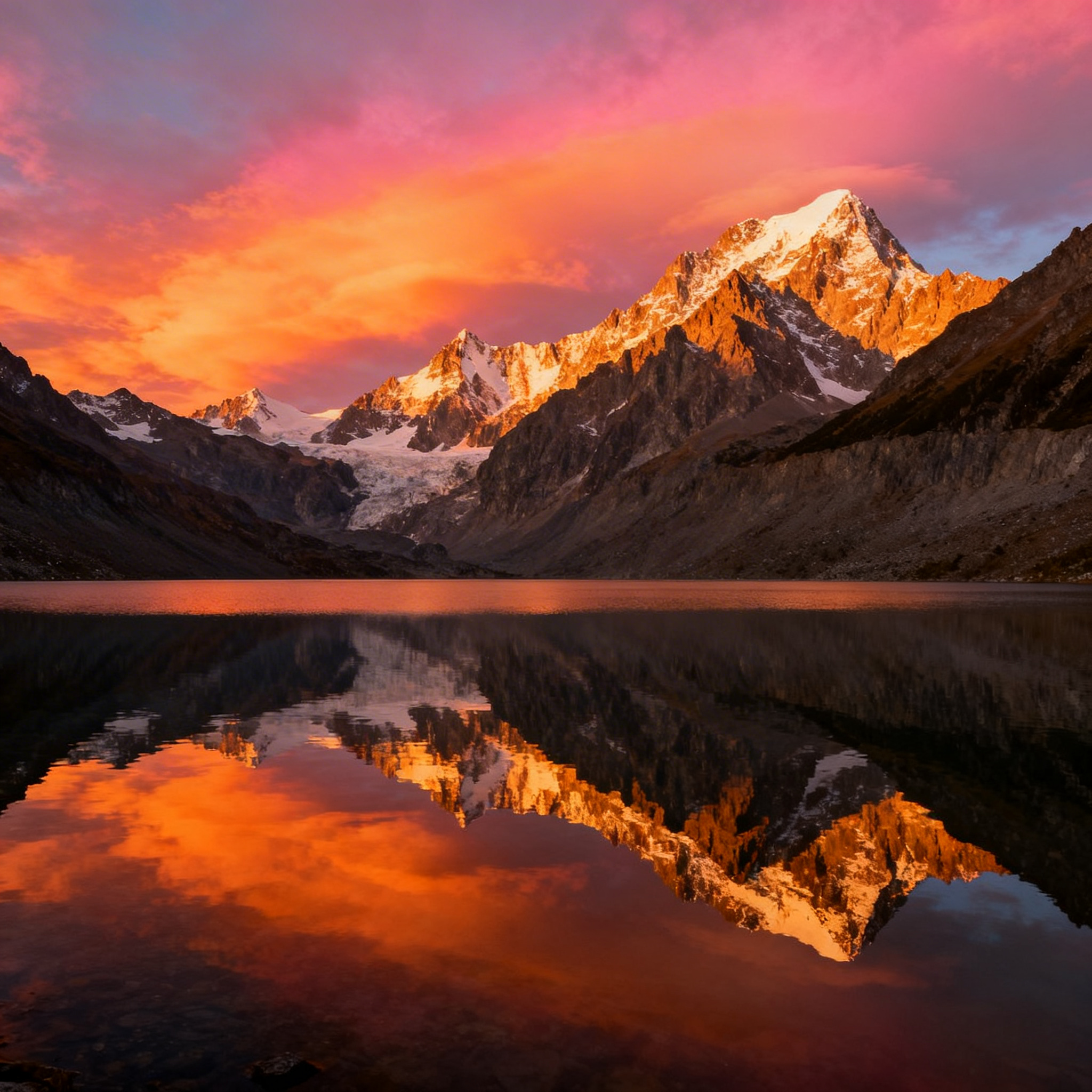
Symmetry and Reflection: Doubling Your Impact
Symmetrical compositions can create powerful, calming images when executed properly. Reflections in water provide natural opportunities for symmetrical landscape compositions.
Best conditions for reflection photography:
- Early morning when winds are typically calm
- Lakes, ponds, and sheltered water bodies
- Wet beaches during golden hour
- Puddles after rainfall
Camera settings for reflections:
- Use a polarizing filter to control reflection intensity
- Focus on the actual subject, not the reflection
- Consider graduated neutral density filters to balance exposure between sky and reflection
- Shoot in RAW format for maximum flexibility in post-processing
Camera Settings and Technical Considerations
Optimal Camera Settings for Landscape Photography
Aperture Priority Mode (A/Av): Most landscape photographers work in aperture priority mode, allowing control over depth of field while the camera selects appropriate shutter speed.
Recommended aperture settings:
- f/8-f/11: Sweet spot for most lenses, providing sharp results across the frame
- f/16: Use only when maximum depth of field is essential, as diffraction can reduce image quality
- f/5.6-f/7.1: For isolating specific elements or when working in low light conditions
ISO Settings:
- Base ISO (typically 100): Use whenever possible for maximum image quality
- ISO 200-400: Acceptable for handheld shots or when slightly faster shutter speeds are needed
- ISO 800+: Avoid unless absolutely necessary, as noise becomes problematic
Focus Techniques:
- Single-point autofocus for precise control
- Focus approximately one-third into the scene for landscapes with strong foreground elements
- Use live view and magnification for critical focusing
- Consider focus stacking for scenes requiring front-to-back sharpness
Essential Equipment for Better Compositions
A high-quality camera body forms the foundation of excellent landscape photography. The Sony A7 IV represents an excellent choice for landscape photographers, offering exceptional dynamic range, weather sealing, and outstanding image quality that handles the demanding conditions often encountered in landscape photography.
Must-have accessories for composition control:
Tripod: Essential for sharp images during golden hour and blue hour photography
- Choose carbon fiber for lighter weight during long hikes
- Ensure the tripod can support your camera and lens combination
- Look for models with reversible center columns for low-angle shots
Filters for enhanced compositions:
- Polarizing filters: Reduce reflections, enhance sky contrast, and saturate colors
- Graduated neutral density filters: Balance exposure between bright skies and darker foregrounds
- Solid neutral density filters: Enable longer exposures for motion blur effects in water and clouds
Practical Field Techniques
Scouting and Planning Your Compositions
Successful landscape photography begins long before you arrive at your destination. Proper planning significantly increases your chances of capturing compelling compositions.
Pre-shoot preparation:
- Research locations using Google Earth, photography forums, and social media
- Use sun and moon tracking apps to predict lighting conditions
- Check weather forecasts for dramatic skies or clearing storms
- Plan to arrive early to scout compositions before optimal lighting
On-location scouting process:
- Walk the area before setting up equipment to identify potential compositions
- Use your smartphone to test different angles and compositions quickly
- Look for unique perspectives that haven’t been widely photographed
- Consider returning to promising locations under different conditions
Working with Natural Light
Understanding and utilizing natural light is crucial for creating compelling landscape compositions. Different lighting conditions require different compositional approaches.
Golden Hour (first/last hour of sunlight):
- Use side lighting to reveal texture and dimension in landscape features
- Position subjects to take advantage of warm, directional light
- Include the sun in compositions for dramatic silhouettes or sunstars
Blue Hour (30-60 minutes after sunset):
- Balance artificial lights with natural sky illumination
- Use longer exposures to capture smooth water and cloud movement
- Focus on overall mood rather than specific details
Overcast conditions:
- Eliminate or minimize sky in compositions
- Focus on intimate landscape details
- Use the soft, even lighting for forest and waterfall photography
Common Composition Mistakes to Avoid
Tilted Horizons: The Subtle Saboteur
Nothing ruins a landscape image faster than a crooked horizon. This seemingly minor error immediately draws attention away from your carefully planned composition.
Prevention techniques:
- Use your camera’s built-in electronic level
- Enable grid lines and align horizons carefully
- Check your images on the LCD immediately after capture
- Consider shooting slightly wide to allow for straightening in post-processing
Cluttered Compositions: Less is Often More
Beginning landscape photographers often try to include too many elements in their compositions, creating visual confusion rather than compelling images.
Simplification strategies:
- Identify your main subject before composing
- Remove or exclude distracting elements through positioning
- Use longer focal lengths to isolate specific elements
- Wait for better conditions that naturally simplify the scene
Ignoring the Background: The Silent Composition Killer
Focusing solely on foreground elements while ignoring background can result in distracting or conflicting elements that weaken your composition.
Background awareness techniques:
- Scan the entire frame systematically before taking the shot
- Move your position to eliminate distracting background elements
- Use depth of field creatively to minimize background distractions
- Consider the relationship between all elements in your composition
Post-Processing for Enhanced Composition
While this guide focuses primarily on in-camera composition techniques, understanding how post-processing can enhance your compositions is valuable.
Composition-enhancing adjustments:
- Cropping: Fine-tune your rule of thirds placement and remove distracting edge elements
- Graduated adjustments: Balance exposure between different areas of your composition
- Local adjustments: Subtly guide the viewer’s eye through selective lighting and contrast
- Color grading: Enhance the mood and visual flow of your composition
Seasonal Considerations for Landscape Composition
Spring Compositions
- Incorporate wildflowers and fresh foliage as foreground elements
- Use longer focal lengths to compress flower fields with distant mountains
- Take advantage of dramatic weather patterns during transition seasons
Summer Compositions
- Focus on alpine locations and high-elevation photography
- Use early morning and late evening light to avoid harsh midday conditions
- Incorporate water features for cooling visual elements
Fall Compositions
- Use colorful foliage as both foreground and background elements
- Create leading lines with fallen leaves or winding streams
- Balance warm foliage colors with cool sky tones
Winter Compositions
- Use snow as a natural simplifying element
- Create contrast between dark subjects and white backgrounds
- Take advantage of longer golden hour periods at higher latitudes
Conclusion and Final Recommendations
Mastering landscape photography composition requires combining technical knowledge with artistic vision and consistent practice. The techniques covered in this guide provide a solid foundation, but the most important step is getting out into the field and applying these principles consistently.
Start by focusing on the fundamental rules like the rule of thirds and leading lines, then gradually incorporate more advanced techniques as they become second nature. Remember that rules are meant to be understood first, then broken creatively when the situation calls for it.
Key takeaways for immediate improvement:
- Always consider foreground, middle ground, and background in your compositions
- Use natural light to your advantage by planning shoots around golden hour and blue hour
- Invest in quality equipment like the Sony A7 IV that won’t limit your creative vision
- Take time to scout locations and visualize compositions before setting up your camera
- Practice these techniques consistently in various conditions and locations
The path to exceptional landscape photography is a journey of continuous learning and experimentation. Each location presents unique challenges and opportunities, and developing your personal vision while applying these fundamental composition principles will set your work apart in this competitive but rewarding field.
Remember that the most important element in any landscape photograph is your unique perspective and artistic vision. Use these composition techniques as tools to express your creative interpretation of the natural world, and don’t be afraid to experiment and develop your own distinctive style.
Related Tags
Looking for the Best Camera Deals?
Check out our latest buying guides and comparison articles to find the perfect camera for your needs.
Browse Buying Guides