
Canon G7X vs Sony RX100: Which Compact Camera Wins in 2024?
Compare Canon G7X vs Sony RX100 compact cameras. Expert review of specs, image quality, features & price to help you choose the best pocket camera.
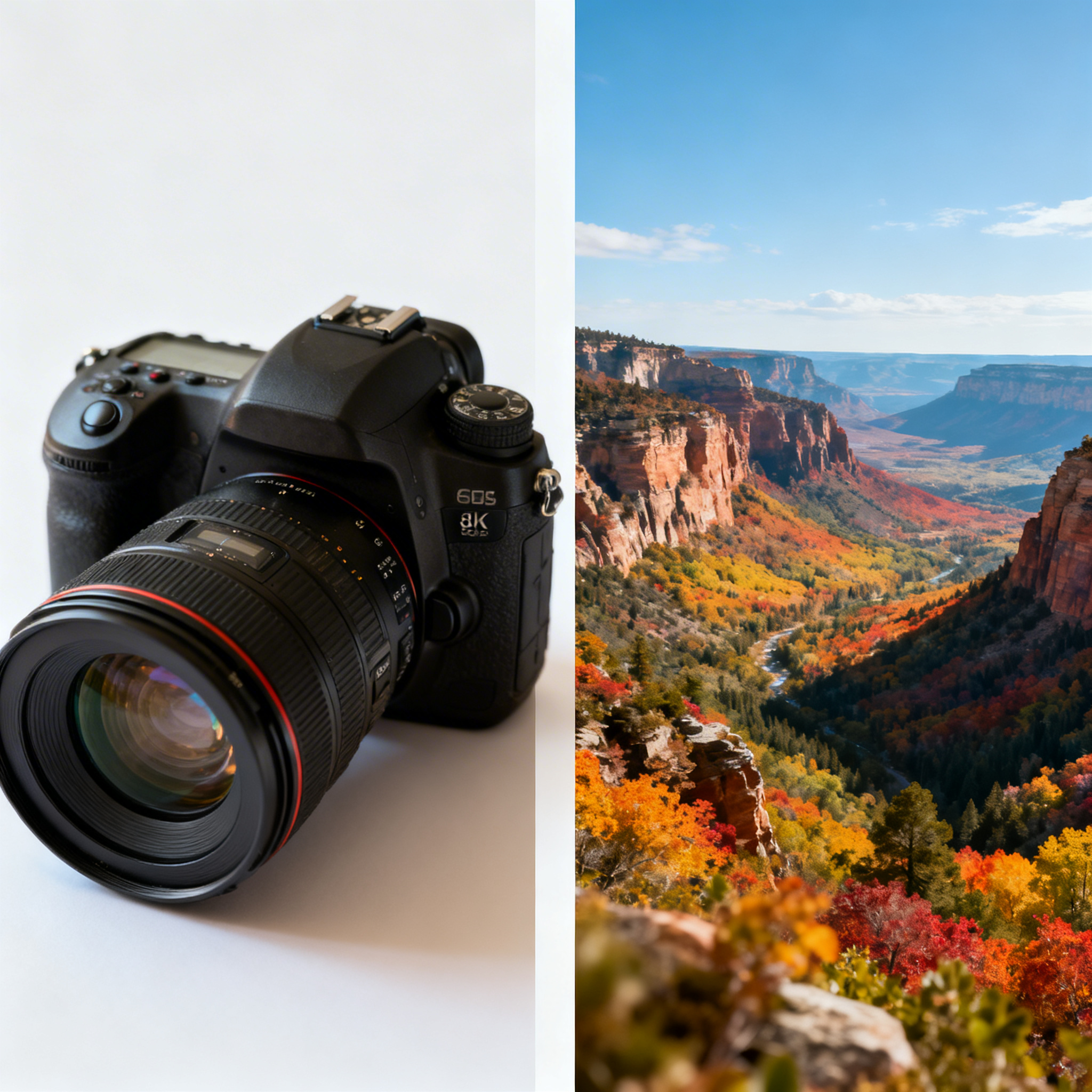
In the world of compact cameras, two models have consistently captured the attention of photographers seeking professional-quality features in a portable package: the Canon PowerShot G7X series and the Sony RX100 series. These pocket-sized powerhouses have revolutionized travel photography and street photography, offering impressive image quality without the bulk of traditional DSLRs or mirrorless cameras.
Both camera lines have evolved through multiple generations, with each iteration bringing significant improvements in image quality, performance, and features. Whether you’re a travel enthusiast, content creator, or photography hobbyist looking for a reliable secondary camera, choosing between these two excellent options can be challenging.
Canon G7X Series Overview
Canon’s PowerShot G7X series has established itself as a formidable player in the premium compact camera market. The series currently includes three main models: the original G7X, G7X Mark II, and the latest G7X Mark III, each building upon its predecessor’s strengths while addressing previous limitations.
Key Strengths of Canon G7X
The Canon G7X series excels in several areas that make it particularly appealing to specific user groups. The most recent G7X Mark III features a 20.1-megapixel 1-inch CMOS sensor paired with Canon’s DIGIC 8 image processor, delivering excellent image quality with vibrant colors and sharp detail reproduction.
One of the standout features of the G7X series is its impressive optical zoom range. The 24-100mm equivalent lens (f/1.8-2.8) provides versatility for various shooting scenarios, from wide landscape shots to portrait photography with pleasant background blur. The fast maximum aperture across the zoom range is particularly beneficial in low-light conditions.
Canon has also prioritized video capabilities in recent iterations, with the G7X Mark III offering 4K video recording and live streaming functionality, making it an attractive option for content creators and vloggers.
Sony RX100 Series Overview
Sony’s RX100 series pioneered the premium compact camera segment and continues to set industry standards. With seven generations spanning from the original RX100 to the current RX100 VII, Sony has consistently pushed the boundaries of what’s possible in a compact form factor.
Key Strengths of Sony RX100
The RX100 series is renowned for its cutting-edge technology and innovative features. Most models in the series feature a 20.1-megapixel 1-inch Exmor RS CMOS sensor combined with Sony’s advanced BIONZ X image processor, resulting in exceptional image quality with excellent dynamic range and low-light performance.
Sony has differentiated various RX100 models by offering different lens configurations. While earlier models featured fixed focal length lenses or modest zoom ranges, later iterations like the RX100 VI and VII include impressive 24-200mm equivalent zoom lenses, providing remarkable versatility in a compact package.
The autofocus system in Sony RX100 cameras is particularly noteworthy, featuring fast and accurate phase-detection and contrast-detection hybrid AF systems that excel in both photo and video applications.
Detailed Specifications Comparison
| Feature | Canon G7X Mark III | Sony RX100 VII |
|---|---|---|
| Sensor | 20.1MP 1” CMOS | 20.1MP 1” Exmor RS CMOS |
| Image Processor | DIGIC 8 | BIONZ X |
| Lens | 24-100mm f/1.8-2.8 | 24-200mm f/2.8-4.5 |
| Optical Zoom | 4.2x | 8x |
| ISO Range | 100-12,800 (exp. 25,600) | 100-12,800 (exp. 25,600) |
| Autofocus Points | 31 | 357 |
| Continuous Shooting | 30 fps (RAW), 20 fps (JPEG) | 20 fps (mechanical), 90 fps (electronic) |
| Video Recording | 4K/30p, FHD/120p | 4K/30p, FHD/120p |
| LCD Screen | 3.0” tilting touchscreen | 3.0” tilting touchscreen |
| Viewfinder | None | 0.39” OLED EVF |
| Wi-Fi/Bluetooth | Yes/Yes | Yes/Yes |
| Battery Life | 235 shots | 260 shots |
| Weight | 304g | 302g |
| Dimensions | 105 × 61 × 42mm | 102 × 58 × 43mm |
Image Quality Comparison
Sensor Performance and Dynamic Range
Both cameras utilize 1-inch sensors, which represent the sweet spot between portability and image quality in the compact camera segment. The Canon G7X Mark III’s 20.1-megapixel CMOS sensor delivers excellent color reproduction with Canon’s characteristic warm, pleasing color science that many photographers prefer, especially for portraits and lifestyle photography.
Sony’s RX100 VII features a more advanced Exmor RS CMOS sensor with back-illuminated design, providing superior low-light performance and better dynamic range. The sensor’s stacked design also enables faster readout speeds, reducing rolling shutter effects and enabling advanced features like high-speed continuous shooting.
In practical terms, both cameras produce excellent image quality suitable for professional applications. The Sony tends to capture more detail in shadow areas and handles high-contrast scenes more gracefully, while the Canon often produces more immediately pleasing colors straight out of camera.
Low-Light Performance
Low-light photography reveals some key differences between these cameras. The Canon G7X Mark III’s faster maximum aperture (f/1.8 at wide-angle vs. f/2.8 on the Sony) provides an advantage in extremely low-light situations, allowing for faster shutter speeds and lower ISO settings.
However, Sony’s superior sensor technology and noise reduction algorithms often produce cleaner images at higher ISO settings. The RX100 VII maintains good image quality up to ISO 3200, with acceptable results at ISO 6400, while the Canon G7X Mark III shows similar performance characteristics but with slightly different noise patterns.
Lens and Zoom Performance
Focal Length Range and Versatility
This is perhaps the most significant difference between these camera systems. Canon’s G7X series features a 24-100mm equivalent lens, which covers the most commonly used focal lengths for general photography. The 4.2x zoom range is sufficient for most shooting scenarios, from group photos to medium telephoto portraits.
Sony’s RX100 VII offers a much more extensive 24-200mm equivalent zoom range, effectively replacing multiple prime lenses or a standard zoom plus telephoto combination. This 8.3x zoom range makes it incredibly versatile for travel photography, wildlife, sports, and situations where you cannot physically move closer to your subject.
Aperture Performance
The Canon G7X Mark III’s f/1.8-2.8 maximum aperture range represents a significant advantage for depth of field control and low-light shooting. The f/1.8 maximum aperture at 24mm is particularly beneficial for astrophotography, indoor photography, and creating artistic background blur.
Sony’s f/2.8-4.5 aperture range is more modest but still respectable for a compact camera with such an extensive zoom range. The f/2.8 maximum aperture at 24mm is quite good, though the f/4.5 at 200mm may require higher ISO settings or slower shutter speeds in challenging lighting conditions.
Autofocus and Performance
Autofocus Speed and Accuracy
Sony’s RX100 VII features one of the most advanced autofocus systems available in a compact camera, with 357 phase-detection AF points covering approximately 68% of the image area. The system can achieve focus in as little as 0.02 seconds under optimal conditions, making it excellent for capturing fast-moving subjects.
Canon’s G7X Mark III uses a 31-point autofocus system that, while not as extensive as Sony’s implementation, still provides reliable performance for most shooting scenarios. The system includes face detection and eye detection capabilities, though not as advanced as Sony’s Real-time Eye AF.
Continuous Shooting Performance
Both cameras offer impressive continuous shooting capabilities, though they achieve this through different approaches. The Canon G7X Mark III can shoot up to 30 fps in RAW mode and 20 fps in JPEG mode, utilizing an electronic shutter for the highest frame rates.
Sony’s RX100 VII offers up to 20 fps with mechanical shutter (maintaining flash sync capability) and an astounding 90 fps with electronic shutter, though the latter comes with some limitations including reduced resolution and increased rolling shutter effects.
Video Capabilities
4K Recording and Features
Both cameras offer comprehensive video recording capabilities suitable for professional content creation. The Canon G7X Mark III records 4K video at 30fps with no crop factor, utilizing the full sensor width for maximum field of view. The camera also includes useful features like vertical video recording for social media content.
Sony’s RX100 VII also records 4K at 30fps but applies a slight crop factor. However, it compensates with superior image stabilization and more advanced video features, including S-Log2 gamma for professional color grading workflows.
Stabilization and Handling
Both cameras rely on electronic image stabilization for video recording, as neither includes in-body mechanical stabilization. Sony’s implementation is generally more effective, particularly when using longer focal lengths, while Canon’s system works well for moderate camera movements and typical handheld shooting.
Build Quality and Design
Physical Construction and Durability
Both camera series feature premium build quality with metal construction and attention to detail. The Canon G7X Mark III features a sleek, minimalist design with a prominent grip area and well-placed controls. The camera feels solid in hand despite its compact dimensions.
Sony’s RX100 VII maintains the series’ signature industrial design with a more angular appearance. The build quality is excellent, though some users find the grip area less comfortable for extended shooting sessions compared to the Canon.
Control Layout and Ergonomics
Canon emphasizes simplicity and ease of use in its control layout, with a mode dial on top and clearly labeled buttons. The touchscreen interface is intuitive and responsive, making it easy for newcomers to navigate settings and features.
Sony’s control layout is more complex but offers greater customization options for advanced users. The camera includes more physical buttons and a customizable control ring around the lens, allowing experienced photographers to access settings quickly without diving into menus.
Battery Life and Connectivity
Power Management
Battery life remains a challenge for both camera systems, as is typical for compact cameras with advanced features. The Canon G7X Mark III officially provides 235 shots per charge, while the Sony RX100 VII offers 260 shots. In real-world usage, both cameras will require charging or battery swaps during intensive shooting sessions.
Both cameras support USB charging, allowing you to power them using portable battery packs during extended shooting sessions or travel.
Wireless Connectivity
Modern connectivity features are well-implemented in both systems. Canon’s G7X Mark III includes built-in live streaming capability, making it particularly attractive for content creators who want to stream directly to platforms like YouTube without additional hardware.
Sony’s RX100 VII offers comprehensive Wi-Fi and Bluetooth connectivity with a robust mobile app that provides full camera control and easy image transfer capabilities.
Real-World Usage Scenarios
Travel Photography
For travel photography, the choice between these cameras often comes down to the importance of zoom range versus low-light performance. The Sony RX100 VII’s 24-200mm lens eliminates the need for multiple lenses and provides flexibility for architectural photography, wildlife encounters, and distant subjects. However, the Canon G7X Mark III’s faster aperture makes it superior for golden hour photography, indoor cultural sites, and evening street photography.
Street Photography
Street photography benefits from both cameras’ compact form factors and excellent image quality. The Canon’s faster aperture provides more creative control over depth of field and better low-light capabilities for early morning or late evening shoots. Sony’s faster autofocus system and longer zoom range offer advantages for candid photography and maintaining distance from subjects.
Content Creation
Content creators will find compelling reasons to choose either camera. Canon’s G7X Mark III offers direct live streaming, vertical video recording, and excellent color reproduction that requires minimal post-processing. Sony’s RX100 VII provides superior image stabilization, more advanced video features, and the versatility of an 8x zoom range for varied content creation scenarios.
Price and Value Proposition
Both camera systems represent significant investments in the compact camera segment, typically priced between $600-$1,200 depending on the specific model and current market conditions. The Canon G7X series generally offers better value for users who prioritize ease of use, excellent color reproduction, and content creation features.
Sony’s RX100 series commands premium pricing but justifies it with cutting-edge technology, superior autofocus performance, and features typically found in much larger camera systems.
Recommendations
Choose Canon G7X Mark III if:
- You prioritize low-light performance and creative control over depth of field
- Content creation and live streaming are important to your workflow
- You prefer Canon’s color science and user-friendly interface
- The 24-100mm focal length range meets your shooting needs
- Budget considerations favor the Canon’s typically lower pricing
Choose Sony RX100 VII if:
- Zoom versatility and the ability to replace multiple lenses is crucial
- You need the fastest autofocus performance available in a compact camera
- Advanced video features and superior image stabilization are priorities
- You’re willing to invest in cutting-edge technology and don’t mind a steeper learning curve
- The comprehensive focal length range justifies the premium pricing
For photographers looking to eventually upgrade to a full-frame system, Sony offers an excellent upgrade path with models like the Sony A7 IV, Sony A7R V, or the flagship Sony A9 III, all of which share similar menu systems and operational philosophy.
Conclusion
Both the Canon G7X series and Sony RX100 series represent the pinnacle of compact camera design, each with distinct advantages that appeal to different types of photographers. Canon’s approach emphasizes ease of use, excellent low-light performance, and content creation features, making it ideal for casual photographers, content creators, and those who value simplicity without sacrificing image quality.
Sony’s RX100 series pushes technological boundaries with advanced autofocus systems, extensive zoom ranges, and professional-level features in an incredibly compact package. It’s the better choice for photographers who need maximum versatility and don’t mind investing time in learning a more complex system.
Ultimately, both cameras will serve most photographers exceptionally well. The decision should be based on your specific shooting requirements, budget considerations, and personal preferences regarding user interface and handling. Consider renting or testing both systems before making your final decision, as the tactile experience and operational philosophy can be just as important as technical specifications in determining which camera will best serve your creative vision.
The compact camera segment continues to evolve rapidly, and both Canon and Sony regularly update their offerings with improved features and capabilities. Regardless of which system you choose, you’ll be investing in a tool capable of producing professional-quality images and videos in a remarkably portable package.
Related Tags
Looking for the Best Camera Deals?
Check out our latest buying guides and comparison articles to find the perfect camera for your needs.
Browse Buying Guides