
Sony A7 IV vs Canon EOS R6 Mark II: Full Camera Comparison
Complete comparison of Sony A7 IV vs Canon EOS R6 Mark II. Compare specs, image quality, autofocus, video features & price to find your ideal camera.
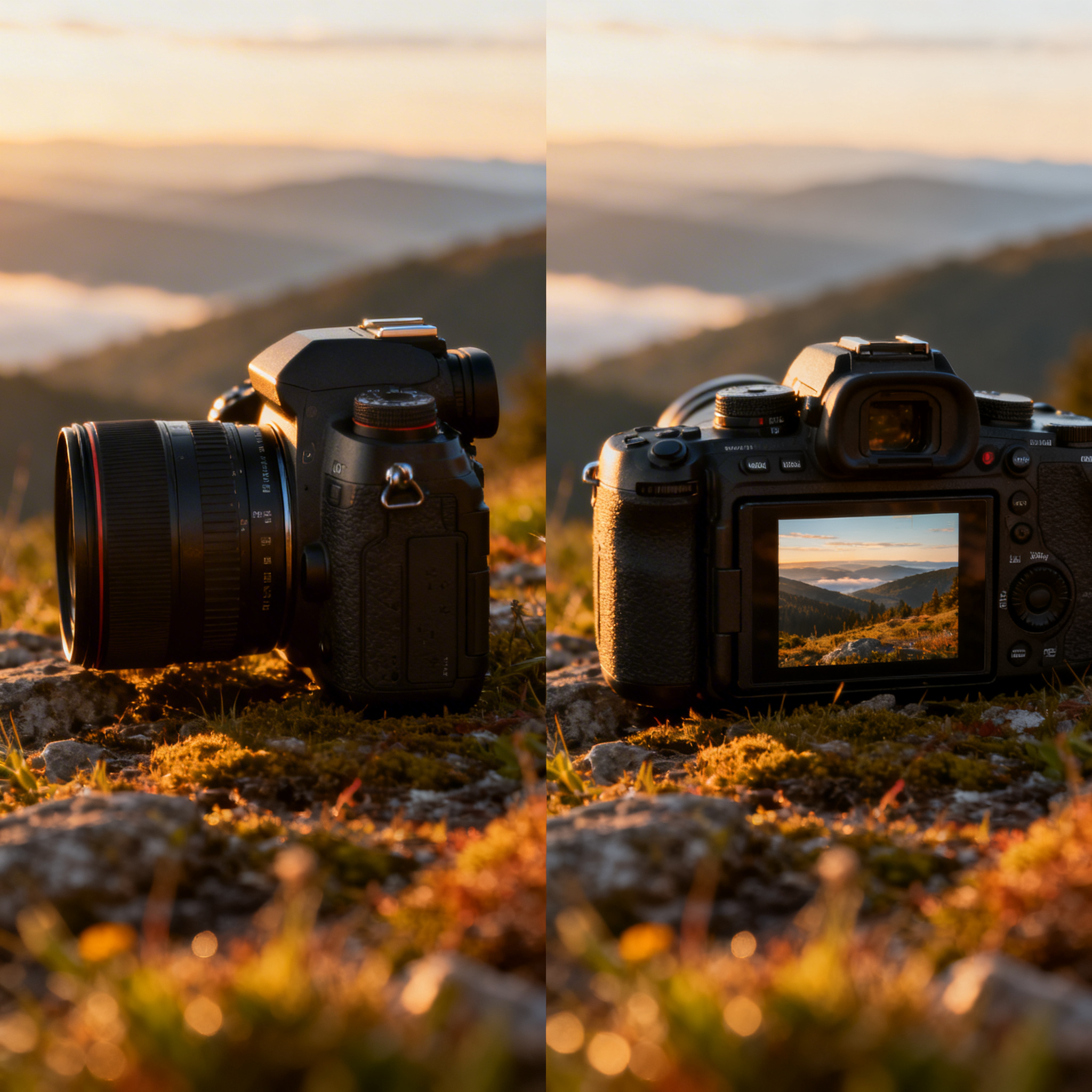
Two of the most impressive full-frame mirrorless cameras on the market today are the Sony A7 IV and the Canon EOS R6 Mark II. Both cameras represent the pinnacle of hybrid photography and videography technology, offering exceptional image quality, advanced autofocus systems, and professional-grade features that cater to serious photographers and content creators.
Whether you’re a seasoned professional looking to upgrade your kit or an enthusiast photographer ready to make the jump to full-frame, choosing between these two powerhouses can be challenging. In this comprehensive comparison, we’ll dive deep into every aspect of these cameras to help you make an informed decision based on your specific needs and shooting style.
Key Specifications Comparison
| Feature | Sony A7 IV | Canon EOS R6 Mark II |
|---|---|---|
| Sensor | 33MP Full-Frame BSI CMOS | 24.2MP Full-Frame CMOS |
| Image Processor | BIONZ XR | DIGIC X |
| ISO Range | 100-51,200 (expandable to 50-204,800) | 100-102,400 (expandable to 50-204,800) |
| Autofocus Points | 759 phase-detection points | 1,053 AF points |
| Burst Rate | 10 fps mechanical, 10 fps electronic | 12 fps mechanical, 40 fps electronic |
| Video Recording | 4K 60p (7K oversampling in 4K 30p) | 4K 60p (no crop) |
| Image Stabilization | 5-axis in-body (up to 5.5 stops) | 5-axis in-body (up to 8 stops with compatible lenses) |
| Viewfinder | 3.69M-dot OLED | 3.69M-dot OLED |
| LCD Screen | 3.0” fully articulating touchscreen | 3.0” fully articulating touchscreen |
| Battery Life | 520 shots (LCD), 580 shots (EVF) | 760 shots (LCD), 540 shots (EVF) |
| Weather Sealing | Yes | Yes |
| Weight | 658g (body only) | 588g (body only) |
Image Quality and Sensor Performance
Resolution and Detail
The Sony A7 IV takes a clear lead in resolution with its 33-megapixel full-frame sensor compared to the Canon R6 Mark II’s 24.2-megapixel sensor. This translates to approximately 37% more pixels, which means significantly more detail capture and greater flexibility for cropping in post-processing.
The higher resolution of the A7 IV makes it particularly attractive for landscape photographers, portrait photographers who need maximum detail, and commercial photographers who require large prints. However, the Canon R6 Mark II’s lower resolution isn’t necessarily a disadvantage – it results in larger individual pixels that can gather more light, potentially leading to better low-light performance.
Low-Light Performance
Both cameras excel in low-light conditions, but they approach it differently. The Canon R6 Mark II’s larger pixels (due to lower resolution on the same sensor size) theoretically provide better light-gathering capability per pixel. In practice, both cameras perform exceptionally well up to ISO 6400, with usable results extending to ISO 25,600 and beyond.
The Sony A7 IV compensates for its smaller pixels with advanced noise reduction algorithms and its newer BIONZ XR processor. Real-world testing shows that the difference in high-ISO performance between these cameras is minimal, with the choice often coming down to personal preference in noise characteristics rather than absolute performance.
Dynamic Range
Both cameras offer excellent dynamic range, crucial for photographers who shoot in challenging lighting conditions. The Sony A7 IV provides approximately 15 stops of dynamic range, while the Canon R6 Mark II delivers around 14.5 stops. This slight advantage to Sony means marginally better shadow recovery and highlight retention, particularly beneficial for landscape and architectural photography.
Autofocus Performance
Speed and Accuracy
The autofocus systems in both cameras represent the cutting edge of mirrorless technology. The Canon R6 Mark II features 1,053 AF points covering approximately 100% of the frame, while the Sony A7 IV utilizes 759 phase-detection points covering about 94% of the sensor area.
In practice, both systems are incredibly fast and accurate. The Canon system tends to be slightly more intuitive for photographers transitioning from DSLR systems, while Sony’s implementation offers more granular customization options that appeal to technical users.
Subject Detection and Tracking
Both cameras feature advanced AI-powered subject detection. The Sony A7 IV excels at detecting and tracking humans, animals, and birds, with particularly impressive eye-detection capabilities that work even when subjects are wearing masks or sunglasses.
The Canon R6 Mark II matches Sony’s human and animal detection capabilities and adds vehicle detection, making it particularly appealing for motorsports and aviation photographers. The tracking performance of both systems is exceptional, with sticky subject tracking that rarely loses focus even in challenging conditions.
Video Capabilities
4K Recording
Both cameras are serious contenders for hybrid shooters who need professional video capabilities. The Sony A7 IV offers 4K recording at up to 60fps with impressive 7K oversampling in 4K 30p mode, resulting in exceptionally detailed footage with minimal aliasing.
The Canon R6 Mark II also provides 4K 60p recording without crop, which is crucial for maintaining the intended field of view of lenses. Both cameras offer 10-bit internal recording, though Sony provides more codec options including XAVC S-I for maximum quality.
Video Features
Sony takes the lead in professional video features, offering S-Log3 and S-Cinetone profiles for maximum grading flexibility. The camera also includes advanced features like focus breathing compensation and active stabilization for handheld shooting.
Canon’s approach focuses on ease of use with excellent straight-out-of-camera color science. The R6 Mark II includes Canon Log 3 and offers impressive dual-pixel autofocus performance in video mode that many filmmakers prefer for its natural, predictable behavior.
Build Quality and Ergonomics
Physical Design
The Sony A7 IV weighs 658g compared to the Canon R6 Mark II’s 588g, making the Canon notably lighter for extended handheld shooting. Both cameras feature robust magnesium alloy construction with comprehensive weather sealing, making them suitable for professional use in challenging conditions.
The Canon R6 Mark II features a deeper grip that many photographers find more comfortable, especially when using larger lenses. The control layout follows Canon’s established ergonomic principles, making it immediately familiar to Canon DSLR users.
User Interface
Sony has significantly improved its menu system with the A7 IV, implementing a more logical structure that’s easier to navigate than previous generations. However, Canon’s menu system remains more intuitive for most users, with clearer organization and more descriptive language.
Both cameras offer extensive customization options, but Sony provides more programmable buttons and customizable function menus, appealing to photographers who like to fine-tune their camera setup for specific shooting scenarios.
Battery Life and Practical Considerations
Power Consumption
Battery life represents one of the Canon R6 Mark II’s strongest advantages, delivering up to 760 shots per charge when using the LCD – significantly more than the Sony A7 IV’s 520 shots. This difference becomes crucial during long shooting days or when traveling without easy access to charging facilities.
Both cameras support USB-C charging and can be powered continuously via external power banks, making them suitable for extended video recording sessions or time-lapse photography.
Memory Cards
The Sony A7 IV features dual card slots (CFexpress Type A/SD and SD), providing excellent flexibility and backup options. The Canon R6 Mark II also offers dual SD card slots, which many photographers prefer due to the wider availability and lower cost of SD cards compared to CFexpress.
Lens Ecosystem and Compatibility
Native Lens Options
Canon’s RF mount system has rapidly expanded to offer an impressive range of native lenses, from affordable RF 50mm f/1.8 STM to professional-grade RF 70-200mm f/2.8L IS USM. The RF mount’s larger diameter and shorter flange distance allow for optical designs that often outperform equivalent EF lenses.
Sony’s FE mount system is more mature, offering the broadest selection of native full-frame mirrorless lenses from both Sony and third-party manufacturers like Sigma, Tamron, and Zeiss. This extensive ecosystem provides options for virtually every photographic need and budget.
Adaptation Capabilities
Both systems offer excellent lens adaptation capabilities. Canon users can seamlessly adapt EF and EF-S lenses with full functionality, making the transition from DSLR systems straightforward. Sony’s system works well with adapted lenses, though native lenses typically provide the best performance and feature compatibility.
Price and Value Proposition
The pricing of both cameras places them in the premium enthusiast to professional category. The Sony A7 IV typically commands a slight premium over the Canon R6 Mark II, reflecting its higher resolution sensor and additional video features.
When considering value, factor in the total cost of ownership, including lenses, accessories, and potential upgrade paths. Canon’s RF system currently offers more affordable lens options at the entry level, while Sony’s system provides more high-end exotic options.
Real-World Performance Insights
Portrait Photography
For portrait work, both cameras excel with their advanced eye-detection systems. The Sony A7 IV’s higher resolution provides more detail for large prints and greater cropping flexibility, while the Canon R6 Mark II’s superior battery life and comfortable grip make it better for extended portrait sessions.
Landscape Photography
Landscape photographers will likely prefer the Sony A7 IV for its higher resolution and slightly better dynamic range. The ability to capture more detail is crucial for large landscape prints, and the superior shadow recovery capabilities provide more flexibility in challenging lighting conditions.
Sports and Wildlife
The Canon R6 Mark II edges ahead for action photography with its faster burst rates (especially in electronic shutter mode), better battery life, and excellent tracking performance. The lighter weight also benefits photographers who need to handheld large telephoto lenses for extended periods.
Wedding Photography
Both cameras are excellent for wedding photography, but the Canon R6 Mark II’s superior battery life and more intuitive operation under pressure give it a slight advantage. The ability to shoot longer without battery changes is crucial during wedding coverage, and Canon’s color science often requires less post-processing for pleasing skin tones.
Recommendations
Choose the Sony A7 IV if:
- You prioritize maximum resolution and detail capture
- Video work is a significant part of your workflow, especially if you need professional features like S-Log3
- You prefer extensive customization options and don’t mind a steeper learning curve
- You already own Sony FE lenses or plan to build a Sony system
- Landscape, studio, or commercial photography represents your primary focus
Choose the Canon R6 Mark II if:
- Battery life and all-day shooting capability are priorities
- You value intuitive operation and familiar menu systems
- Sports, wildlife, or event photography dominates your work
- You’re transitioning from a Canon DSLR system
- You prefer a lighter camera for handheld shooting
Both the Sony A7 IV and Canon EOS R6 Mark II represent exceptional cameras that will serve professional and enthusiast photographers well. Your choice should ultimately depend on your specific shooting needs, preferred workflow, and existing lens investments. Neither camera will hold back your creative vision – they’re both capable of producing stunning results in the hands of a skilled photographer.
Consider renting both cameras if possible before making your final decision, as personal preference in handling and operation often proves more important than specification differences. Whichever you choose, you’ll have a powerful tool capable of capturing your creative vision with exceptional quality and reliability.
Related Tags
Looking for the Best Camera Deals?
Check out our latest buying guides and comparison articles to find the perfect camera for your needs.
Browse Buying Guides