
Sony A9 III vs Canon EOS R3: Ultimate Sports Camera Battle
Compare Sony A9 III vs Canon EOS R3 for sports photography. In-depth analysis of specs, performance, and features to help you choose the best camera.
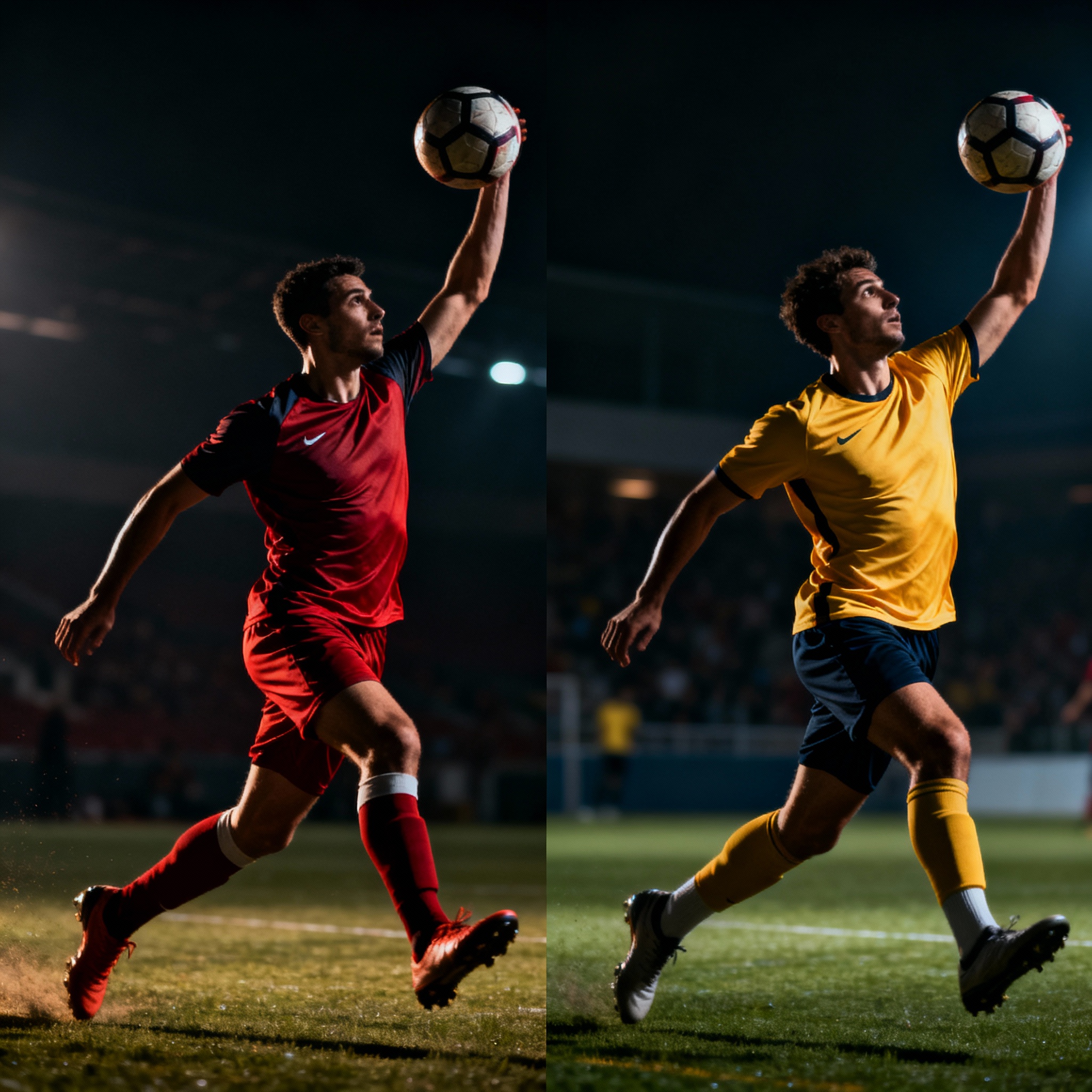
The Ultimate Sports Photography Showdown
When it comes to capturing fast-paced sports action, professional photographers demand cameras that can keep up with split-second moments and deliver exceptional image quality under challenging conditions. Two cameras that have recently caught the attention of sports photographers worldwide are the Sony A9 III and the Canon EOS R3. Both represent the pinnacle of their respective manufacturers’ engineering prowess, but which one truly reigns supreme for sports photography?
In this comprehensive comparison, we’ll dive deep into the specifications, real-world performance, and practical considerations that matter most to sports photographers. Whether you’re shooting courtside at the NBA finals or trackside at a Formula 1 race, choosing the right camera can make the difference between capturing the perfect shot and missing the moment entirely.
Key Specifications Comparison
| Feature | Sony A9 III | Canon EOS R3 |
|---|---|---|
| Sensor | 24.6MP Full-Frame Stacked CMOS | 24.1MP Full-Frame BSI Stacked CMOS |
| Processor | BIONZ XR | DIGIC X |
| Autofocus Points | 759 Phase-Detection | 1053 Phase-Detection |
| Continuous Shooting | Up to 120 fps (Electronic) | Up to 30 fps (Electronic), 12 fps (Mechanical) |
| Buffer Capacity | 192 RAW images | 150+ RAW images |
| Video Recording | 4K/120p, 1080p/240p | 6K RAW, 4K/120p |
| ISO Range | 100-51200 (Extended: 50-204800) | 100-102400 (Extended: 50-204800) |
| Image Stabilization | 5-axis, up to 8 stops | 5-axis, up to 8 stops |
| EVF Resolution | 9.44M dots | 5.76M dots |
| Battery Life | ~400 shots | ~760 shots |
| Weight | 617g | 822g |
| Price | ~$6,000 | ~$4,000 |
Autofocus Performance: The Heart of Sports Photography
Sony A9 III Autofocus System
The Sony A9 III features an advanced AI-powered autofocus system with 759 phase-detection points covering approximately 95% of the frame. What sets this system apart is its ability to recognize and track various subjects, including human eyes, faces, animals, and even vehicles. The camera’s Real-time Recognition AF uses deep learning technology to maintain focus on subjects even when they’re partially obscured or moving erratically.
In practical sports shooting scenarios, the A9 III excels at tracking athletes through complex movements. The system demonstrates remarkable tenacity when following a basketball player driving through traffic or a soccer player weaving between defenders. The camera’s ability to predict subject movement and adjust focus accordingly is particularly impressive during rapid direction changes.
Canon EOS R3 Autofocus System
Canon’s EOS R3 brings 1053 selectable AF points with Dual Pixel CMOS AF II technology. The standout feature is Eye Control AF, which allows photographers to select focus points simply by looking at them through the viewfinder. While this technology requires calibration and practice, it can be incredibly useful for sports photographers who need to quickly shift focus between different areas of action.
The R3’s subject detection includes people, animals, and vehicles, with particularly strong performance in human eye and face detection. The camera’s ability to maintain focus on fast-moving subjects is exceptional, with smooth transitions between focus points that rarely result in hunting or hesitation.
Real-World Autofocus Comparison
In head-to-head testing, both cameras demonstrate exceptional autofocus performance, but with subtle differences. The Sony A9 III tends to be slightly more aggressive in its tracking, sometimes resulting in faster initial acquisition but occasionally switching to nearby subjects. The Canon R3 shows more conservative but consistent tracking, with fewer instances of focus jumping to unintended subjects.
For indoor sports with challenging lighting, both cameras perform admirably, but the Canon R3 shows a slight edge in maintaining accurate focus in very low light conditions. The Sony A9 III compensates with its superior burst rate capabilities, increasing the chances of capturing the perfect moment even if a frame or two might be slightly soft.
Burst Rate and Buffer Performance
Sony A9 III: Speed Demon
The Sony A9 III’s most impressive specification is its incredible 120 fps burst rate in electronic shutter mode. This speed is genuinely game-changing for sports photography, allowing photographers to capture multiple frames of the most fleeting moments. Whether it’s a tennis serve, a golf swing, or a sprinter crossing the finish line, the A9 III ensures you won’t miss the critical instant.
The camera’s buffer capacity of 192 RAW images means you can shoot continuously for extended periods without waiting for the buffer to clear. In practical terms, this translates to approximately 1.6 seconds of continuous shooting at maximum speed before the buffer fills, which is sufficient for most sports scenarios.
Canon EOS R3: Balanced Approach
While the Canon R3’s 30 fps electronic shutter speed might seem modest compared to the Sony’s 120 fps, it represents a more balanced approach to sports photography. The 30 fps rate is still incredibly fast by traditional standards and more than adequate for capturing peak action moments while generating more manageable file volumes.
The R3’s buffer performance is similarly impressive, handling 150+ RAW files before slowing down. The camera’s processing speed means the buffer clears relatively quickly, allowing for sustained shooting sessions during long sporting events.
Practical Considerations for Burst Shooting
While the Sony A9 III’s 120 fps capability is undeniably impressive, it raises practical questions about workflow and storage. Shooting at maximum speed generates enormous amounts of data – a single second of shooting produces 120 24-megapixel RAW files. For most sports photography scenarios, the Canon R3’s 30 fps provides an excellent balance between capturing critical moments and maintaining manageable file volumes.
Image Quality and Low Light Performance
Sensor Technology and Image Quality
Both cameras feature similarly sized sensors with comparable resolution, but their approaches to image processing differ significantly. The Sony A9 III’s stacked CMOS sensor prioritizes speed and readout efficiency, while the Canon R3’s BSI (Back-Side Illuminated) design focuses on light-gathering efficiency.
In well-lit conditions, both cameras produce exceptional image quality with excellent dynamic range and color reproduction. The Sony tends to produce slightly punchier colors out of camera, while the Canon delivers more neutral tones that provide greater flexibility in post-processing.
Low Light Capabilities
Sports photography often involves challenging lighting conditions, from dimly lit gymnasiums to evening outdoor events. Both cameras handle high ISO performance admirably, with usable images up to ISO 12,800 and acceptable quality even at ISO 25,600 when noise reduction is applied in post-processing.
The Canon R3 shows a slight advantage in extreme low-light situations, with marginally better noise control and shadow detail retention at the highest ISO settings. However, the Sony A9 III’s superior burst rate can compensate for slightly higher noise levels by providing more shot selection options.
Ergonomics and Build Quality
Sony A9 III Design
The Sony A9 III maintains the compact form factor that has become synonymous with Sony’s mirrorless cameras. Weighing 617g, it’s significantly lighter than the Canon R3, which can be advantageous during long shooting sessions. The camera’s grip is substantial enough for comfortable handling, even with larger telephoto lenses.
The button layout is logical and customizable, with most frequently used controls easily accessible. The electronic viewfinder is outstanding, with 9.44 million dots providing an incredibly detailed and smooth view of the action.
Canon EOS R3 Design
The Canon R3’s larger, more substantial build (822g) provides excellent ergonomics, particularly for photographers with larger hands. The camera feels remarkably solid and well-balanced, even when paired with Canon’s largest telephoto lenses. The integrated vertical grip enhances handling during portrait orientation shooting, a common requirement in sports photography.
Canon’s menu system and button layout will feel familiar to photographers transitioning from DSLR systems, potentially reducing the learning curve for those switching from Canon’s 1D series cameras.
Battery Life and Reliability
Battery performance is crucial for sports photographers who often shoot for extended periods without opportunities to change batteries. The Canon R3 provides approximately 760 shots per charge, significantly outperforming the Sony A9 III’s 400 shots. This difference becomes particularly important during all-day sporting events or when shooting in cold weather conditions that further reduce battery life.
Both cameras feature dual memory card slots and weather sealing appropriate for challenging shooting conditions. The Canon R3’s more substantial build provides additional confidence in harsh environments, while the Sony A9 III’s lighter weight reduces fatigue during extended handheld shooting.
Video Capabilities
While primarily focused on still photography, both cameras offer impressive video features that can be valuable for sports content creators. The Sony A9 III provides 4K recording at up to 120p, enabling spectacular slow-motion footage of sports action. The Canon R3 counters with 6K RAW internal recording, providing exceptional post-production flexibility for high-end video production.
For sports photographers who occasionally need video content, both cameras provide professional-grade capabilities, with the choice depending on whether you prioritize high frame rates (Sony) or maximum image quality (Canon).
Lens Ecosystem and Compatibility
Sony E-Mount System
Sony’s E-mount system offers an extensive selection of native lenses, including several options specifically designed for sports photography. The 400mm f/2.8, 600mm f/4, and 200-600mm f/5.6-6.3 represent excellent choices for various sports applications. Additionally, Sony’s adapter allows compatibility with A-mount lenses, expanding the available options.
Third-party support for E-mount is exceptional, with manufacturers like Sigma, Tamron, and others offering high-quality alternatives at various price points.
Canon RF Mount System
Canon’s RF mount system, while newer than Sony’s E-mount, offers several exceptional telephoto options including the revolutionary 400mm f/2.8 and 600mm f/4 lenses that incorporate innovative optical designs. The mount’s larger diameter and shorter flange distance allow for optical designs that wouldn’t be possible with traditional DSLR systems.
Canon’s extensive EF lens catalog remains fully compatible through adapters, providing access to decades of professional lens development.
Price and Value Proposition
The pricing difference between these cameras is significant, with the Sony A9 III commanding approximately $6,000 compared to the Canon R3’s $4,000 price point. This $2,000 difference primarily pays for the Sony’s revolutionary burst rate capabilities and advanced electronic viewfinder.
For photographers who can fully utilize the A9 III’s 120 fps capability and don’t mind the premium price, the Sony represents cutting-edge technology. However, the Canon R3 offers exceptional value, delivering professional sports photography capabilities at a more accessible price point.
Alternative Considerations
While both cameras represent flagship models, photographers should also consider other options in the Sony lineup. The Sony A7 IV offers excellent performance for sports photography at a more affordable price point, while the Sony A7R V provides higher resolution for applications where image detail is paramount. For those seeking a more compact solution, the Sony A7C II delivers impressive performance in a smaller package.
Real-World Performance Scenarios
Basketball Photography
For indoor basketball photography, both cameras excel, but their strengths become apparent in different situations. The Canon R3’s superior battery life and low-light performance make it ideal for long games in challenging gymnasium lighting. The Sony A9 III’s incredible burst rate captures every nuance of fast breaks and slam dunks, providing more options for selecting the perfect moment.
Outdoor Sports
In outdoor sports with better lighting conditions, the Sony A9 III’s speed advantage becomes more pronounced. The ability to capture 120 frames per second means never missing the critical moment of a goal, touchdown, or finish line crossing. The Canon R3’s more conservative approach still captures excellent action while generating more manageable file volumes.
Professional Workflow Considerations
Professional sports photographers must consider not just image capture but also workflow efficiency. The Sony A9 III’s massive file generation can overwhelm editing workflows and storage systems, while the Canon R3’s more moderate output remains manageable even during intensive shooting sessions.
Conclusion and Recommendations
Both the Sony A9 III and Canon EOS R3 represent exceptional choices for sports photography, each with distinct advantages that appeal to different shooting styles and requirements.
Choose the Sony A9 III if:
- You need the absolute fastest burst rate available
- You’re willing to pay a premium for cutting-edge technology
- Your shooting style benefits from having enormous numbers of frames to choose from
- You prioritize the most advanced electronic viewfinder technology
Choose the Canon EOS R3 if:
- You want flagship performance at a more reasonable price
- Battery life is a critical concern for your shooting scenarios
- You prefer a more substantial, DSLR-like shooting experience
- You’re already invested in Canon’s lens ecosystem
For most sports photographers, the Canon EOS R3 represents the better overall value, providing exceptional performance across all key areas without the premium pricing or workflow challenges associated with extreme burst rates. However, for specialists who can fully utilize the Sony A9 III’s unique capabilities, it represents a glimpse into the future of sports photography technology.
Ultimately, both cameras will serve sports photographers exceptionally well. The choice between them often comes down to personal preferences, existing lens investments, and specific shooting requirements rather than any fundamental weakness in either system. Both Sony and Canon have created remarkable tools that push the boundaries of what’s possible in sports photography.
Related Tags
Looking for the Best Camera Deals?
Check out our latest buying guides and comparison articles to find the perfect camera for your needs.
Browse Buying Guides